I Skipped the iPhone Air. Three Weeks Later, I Wished I Hadn’t.
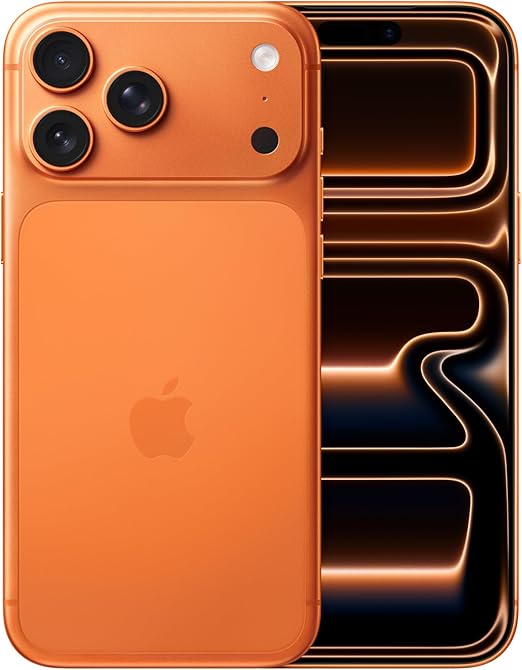
“I’ll wait for next year.” That’s what I said. That’s what a lot of us said. And right now, holding my iPhone 15 next to my friend’s iPhone Air — I genuinely feel like I made the wrong call.
Let me be upfront about something before we go any further. This is not a standard product review. You won’t find a boring specs breakdown or a comparison table here. What you will find is an honest conversation about why skipping the iPhone Air is starting to feel like one of the more significant tech mistakes people are making right now — and why the reasons most people gave themselves for waiting simply don’t hold up anymore.
If you’re on an iPhone 14, 15, or 16 and you told yourself to “wait and see,” this is worth reading. Not because Apple paid anyone to say it. But because the gap between what you’re holding right now and what the iPhone Air actually is — has gotten uncomfortably wide.

Apple iPhone 17 Pro Max 256 GB: 6.9-inch Display with ProMotion, A19 Pro Chip, Best Battery Life in Any iPhone...

Let’s Start With the Thing Nobody Wants to Admit
Your current iPhone is fine. Nobody is disputing that. It makes calls, runs apps, takes decent photos, and does everything a smartphone is supposed to do. And that’s exactly the problem — because “fine” has become the enemy of noticing how far behind you’ve actually fallen.
The iPhone Air is not a minor iterative upgrade. It is genuinely, categorically different from anything Apple has released before. And the people who skipped it using the standard “it’s just a thinner phone” logic are already discovering they undersold what that actually means in daily life.
Here’s what the numbers actually look like for iPhone 14 users right now.
40%Faster CPU than the iPhone 14 Pro — not the base model, the Pro
5.6mmThickness — 30% thinner than any iPhone you’ve ever held
3×More peak GPU compute than the chip in your current iPhone
Those aren’t incremental numbers. That’s a generational leap packed into a device that’s literally thinner than your finger.
What You’re Actually Missing Every Single Day
Most people think the iPhone Air is about thinness. Apple made it easy to think that — the marketing is beautiful, the design photos are stunning, and yes, 5.6mm is genuinely hard to believe until you hold it. But the thinness is almost the least important part of what’s changed.
The A19 Pro Chip — And Why Your Phone Feels Slower Than It Did
The iPhone Air runs on the A19 Pro — the same chip family as the iPhone 17 Pro, with a 6-core CPU that Apple describes as the fastest in any smartphone. It has 12GB of RAM. Your iPhone 14 has 6GB. Your iPhone 15 has 6GB. Your iPhone 16 has 8GB. In the era of on-device AI — where every useful feature Apple is building now requires serious memory and processing headroom — that gap is not a spec sheet footnote. It is the difference between features that work fluidly and features that stutter, delay, or simply aren’t available to you at all.
Apple Intelligence — the AI layer that’s reshaping how iPhones actually work — runs better, faster, and with more capability on the A19 Pro than on anything you’re currently carrying. Every month that passes, more of iOS 26’s headline features will be quietly optimised for the new chip generation. The longer you stay on older hardware, the more of that you’ll be watching from the outside.
The Display You Didn’t Know You Were Missing
The iPhone Air has a 6.5-inch Super Retina XDR display with ProMotion at up to 120Hz. If you’re on an iPhone 14 — your screen runs at a fixed 60Hz. That’s not a small gap. 120Hz is the difference between scrolling that feels like glass and scrolling that, once you’ve experienced the alternative, feels like it’s dragging. People who switch from 60Hz to 120Hz almost universally say they can’t go back. The iPhone Air gives you that on a larger, brighter screen surrounded by some of Apple’s thinnest bezels ever.
Wi-Fi 7 and Bluetooth 6 — Your Connections Are Already Outdated
The iPhone Air ships with Apple’s new N1 wireless chip — enabling Wi-Fi 7 and Bluetooth 6. Wi-Fi 7 delivers speeds that make Wi-Fi 6 look pedestrian. Bluetooth 6 improves connection stability and precision in ways that matter for AirPods, Apple Watch, and every wireless device in your home. If you’re building a smart home, a home studio, or just care about your AirPods not dropping out — the underlying connectivity hardware in your current iPhone is already a generation behind what the Air brings to the table.
“The iPhone Air isn’t thinner because Apple removed things. It’s thinner because Apple rethought everything — and then made it faster too.”
Ceramic Shield 2 — Your Screen Is More Fragile Than You Think
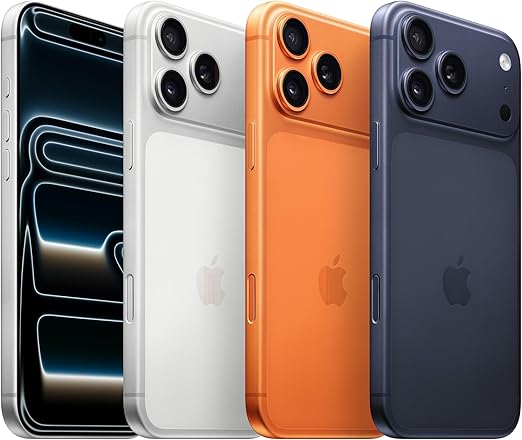
The iPhone Air uses Ceramic Shield 2 on the front — delivering 3x better scratch resistance than previous-generation Ceramic Shield. The back is also Ceramic Shield, not glass, making it 4x more crack-resistant than any iPhone that came before it. The titanium frame replaces aluminum. If you’ve ever cracked a screen, watched your phone collect scratches in a pocket, or dropped it at an angle that made your heart stop — the Air’s build quality is a meaningfully different proposition. Not marginally better. Structurally, categorically more durable.
The “I’ll Wait for the iPhone 18” Argument Is Weaker Than It Looks
Here’s something a lot of people glossed over: There is no standard iPhone 18 coming in 2026.
Apple has confirmed it is changing its release cadence for entry and mid-tier iPhones. The iPhone 18 Pro and a rumoured iPhone Fold are expected in 2026 — but the next standard and Air-tier refresh is not expected until 2027 at the earliest.
That means the iPhone Air is not a product you’re going to be “one cycle behind” on in twelve months. It’s the product that sits at the top of its tier for the next two years. People who skipped it expecting a quick successor to justify the wait are going to be waiting considerably longer than they planned.
This matters more than it sounds. The upgrade cycle for most iPhone users is 2–3 years. If you’re on an iPhone 14 right now and you skip the Air, you’re potentially looking at using a three-to-four-year-old device until the next comparable refresh in 2027. That’s not “waiting for the right moment.” That’s just falling further behind on a longer timeline than you accounted for.
What iPhone 14, 15 and 16 Users Are Saying After Switching
The regret isn’t dramatic. Nobody’s having a breakdown over a smartphone. But the pattern in what upgraders are saying is consistent enough to be worth paying attention to.
What people are saying after they made the switch
- “I didn’t realise how heavy my old phone was until I didn’t have it anymore. The Air just disappears.”
- “The 60Hz on my old phone is genuinely hard to look at now when someone else is using one.”
- “Apple Intelligence on the Air is a completely different experience to what I had on my 15. It’s actually useful now.”
- “I’ve dropped this twice already. Old me would have been at the repair shop. Not a scratch.”
- “I kept saying I’d wait. My partner upgraded. After one week of seeing theirs I ordered the same day.”
The common thread isn’t excitement about the specs. It’s the physical experience — how it feels in hand, in a pocket, against a face — and the growing realisation that older devices, which felt fine before, now feel noticeably dated in ways that are hard to un-notice.
Your iPhone 14 vs The Air — Side by Side
Your iPhone 14 / 15 / 16
- A15 / A16 / A18 chip
- 6GB or 8GB RAM
- 60Hz display (iPhone 14)
- Aluminum frame
- Standard glass back
- Wi-Fi 6 / Bluetooth 5.3
- 7.8mm thick
- No Apple Intelligence full feature set
- Next upgrade likely 2027
iPhone 17 (2025)
- A19 Pro chip — fastest in any smartphone
- 12GB RAM
- 120Hz ProMotion display
- Grade 5 Titanium frame
- Ceramic Shield 2 front & back
- Wi-Fi 7 / Bluetooth 6
- 5.6mm — thinnest iPhone ever
- Full Apple Intelligence support
- No direct successor until 2027
Apple iPhone 17 Pro Max 256 GB: 6.9-inch Display with ProMotion, A19 Pro Chip, Best Battery Life in Any iPhone...
5,048.01 AED in stock amazon.ae
Last update was on: April 15, 2026 3:25 pm
amazon.ae
Last update was on: April 15, 2026 3:25 pm- ESIM. FLEXIBLE. SECURE. SEAMLESS.—iPhone 17 Pro Max activates with an eSIM. With eSIM, you enjoy greater flexibility, enhanced convenience, increased security, and seamless connectivity, especially when traveling internationally.
- UNIBODY DESIGN. FOR EXCEPTIONAL POWER.—Heat-forged...
The One Genuine Compromise — And Why Most People Won’t Care
To be fair here — because the best way to build trust is to tell you what’s actually true — the iPhone Air does make one notable trade-off. It has a single rear camera rather than the dual or triple-lens systems on the iPhone 17 and 17 Pro.
That single 48MP Fusion lens is excellent. It shoots sharp, vibrant portraits, handles low light well, and supports 1x and 2x zoom with good quality. But if you regularly shoot at ultra-wide angles, need macro photography, or want optical telephoto zoom beyond 2x — the Air is not the right choice and you should know that going in.
For the overwhelming majority of iPhone users though — the ones who shoot everyday life, portraits, food, travel, and social content — the Air’s single camera is more than good enough. Reviewers have consistently found the photo quality excellent for real-world use. The gap only shows up in edge cases that most people never push their phones to anyway.
If you care deeply about versatile zoom and ultra-wide photography, the iPhone 17 Pro is the right call. But if the camera isn’t your primary reason for upgrading, the Air’s single lens is not the dealbreaker it’s being portrayed as by people looking for reasons to stay put.
Introducing iPhone 17 Pro | Apple
The Real Question — What Are You Actually Waiting For?
This is the part nobody asks out loud. Most people who “decide to wait” aren’t waiting for a specific feature. They’re not holding out for a spec that hasn’t arrived yet. They’re waiting because upgrading feels like a big decision and doing nothing feels easier than doing something.
But here’s what that actually looks like in practice right now. You’re carrying an iPhone 14 with half the RAM of the Air, a chip that’s 40% slower, a screen running at half the refresh rate, older wireless technology, and a glass back that will crack before a Ceramic Shield one does. Every six months you stay on it, the software optimisations in iOS tilt further toward the newer hardware. Features arrive first on Pro chips. Performance gaps compound quietly over time.
The iPhone Air isn’t asking you to upgrade for the sake of a number. It’s offering a device that is physically lighter, structurally tougher, significantly faster, meaningfully smarter, and will stay current for longer than almost any iPhone Apple has released in recent memory — because there’s no direct successor coming to replace it for at least two years.
That’s not a hard sell. That’s just an honest look at the situation.
Who Should Buy the iPhone Air Right Now
- Anyone on iPhone 14 — the performance and display jump alone is significant enough to feel it immediately
- iPhone 15 users who skipped 16 and kept waiting — you’ve waited long enough and the Air is worth breaking the cycle for
- iPhone 16 users who want Pro-chip performance without the Pro price — the Air gives you A19 Pro and 12GB RAM for $100 less than the 17 Pro
- Anyone who cares about how their phone feels in hand, in a pocket, and in everyday life — the Air’s physical experience is unlike any iPhone before it
- Anyone building into the Apple ecosystem — AirPods Pro, Apple Watch, MacBook — Wi-Fi 7 and Bluetooth 6 make every connected device work better
Final Thought
Nobody is going to tell you that you need a new phone. Your current one works. It’ll keep working. iOS will keep updating it for a while yet. You can absolutely stay where you are.
But if you’re reading this on an iPhone 14, 15, or 16 — and you’re at the point in your upgrade cycle where you’ve been thinking about it — the iPhone Air is the answer to that question. Not because of any one feature. Because of the complete picture: the chip, the build, the display, the weight, the connectivity, the durability, and the fact that no equivalent upgrade is coming to this tier until 2027.
The people who jumped on it aren’t gloating. They’re just quietly using a phone that feels like it’s from the future — while the rest of us keep saying we’ll wait for next year.
There is no next year. Not for this one.See the iPhone Air — Apple.com →
This post contains affiliate links. Published March 10, 2026. Specs sourced from Apple.com and verified third-party reviews. Upgrade decisions are personal — this post represents one perspective based on publicly available information.